Stay near Pua's town services if you will not have your own transport, choose a field-edge or hillside property if spending time at the accommodation is a priority, and consider the direction of Highway 1256 if your next stop is across the mountains. The main decision is how you will reach food and your next destination. A beautiful room becomes inconvenient when every ordinary errand needs an unplanned ride.
Disclosure: RoamNivo may receive a commission through booking links at no extra cost to you. This is a desk-researched location guide, not a personal inspection. The zones below are practical planning categories, not formal neighbourhood boundaries or guarantees about every property within them.
Search hotels and compare room options
Choose a base by the journey you will repeat
| Type of location | Most useful when | Main compromise |
|---|---|---|
| Town and market services | You need meals, pickups and everyday errands without a private vehicle | Less emphasis on an isolated rural outlook |
| Field-edge accommodation | You want to spend quiet time beside the landscape | Food and transport may require advance arrangements |
| Hillside property | A view from the accommodation is central to the visit | Slopes, steps and the entrance road need checking |
| Eastern departure side | Your itinerary continues towards Highway 1256 | A convenient departure direction may be less convenient for evening services |
Start with a map containing only three points: your accommodation, a realistic dinner option and the pickup or parking arrangement for tomorrow. If that small triangle works, you have a viable base. Attractions can then be added without disguising an inconvenient everyday routine. For named properties and room differences, see the separate Pua hotel comparison.

Town services: the practical choice without a car
A base near Pua's services reduces the number of journeys you must organise. This is especially useful after arriving with luggage or when you want to eat independently. However, a property described as “central Pua” may still sit on a road or slope that does not suit your walking preferences. Inspect the actual route from its entrance.
Ask the host where guests normally eat in the evening and how they reach it. A named restaurant and an explanation of the route are more useful than “everything nearby.” Check opening days separately. If the only realistic meal requires a ride, include that ride in the daily budget rather than treating it as an occasional extra.
The municipality publishes an accommodation directory, which can help identify local options and their names. It is a starting point for research, not a live booking platform or an endorsement of every property's current facilities. Cross-check the address against the accommodation's own confirmation so that similar names do not send your driver to the wrong entrance.
This location type is a sensible default for a first visit without independent transport. Once you have a confirmed driver for a rural stay, the balance may change. Until then, keeping meals and pickups straightforward can contribute more to a relaxed visit than having the widest possible view.
Field-edge stays: decide what you expect to do there
A rural outlook works best when it is part of your actual day. If you intend to leave at breakfast and return after sunset, you may barely use the feature that drew you to the property. If you want a slow morning, reading time or a quieter afternoon, the position can justify a different transport arrangement.
Do not assume promotional rice-field photographs represent your travel dates. Fields change through cultivation and harvest, and neighbouring land is outside the hotel's control. Ask for a recent photograph from the relevant room or shared terrace. The useful question is what the view looks like now, not whether the booking page contains a green landscape.
Check the practical boundary between accommodation and countryside. Is there usable seating at the property, or are you expecting to walk along paths on someone else's land? Ask the host about legitimate walking routes and respect local access. A field in the view is not automatically a visitor facility.
For an evening at the property, establish dinner availability before arrival and ask whether advance orders are needed. Carrying a snack is easy; discovering that the only planned meal is unavailable can reshape the whole evening. Treat this as part of selecting the location rather than a minor question after booking.
Hillside accommodation: investigate the last part of the journey
A hillside map pin tells you little about the last approach. Request the route from the main road to reception and from reception to your room. Confirm where a driver can stop, where you unload luggage and whether stairs are involved. These details matter more than a straight-line distance shown on a search map.
If you drive, ask about the entrance and parking arrangement for your vehicle. If someone else drives, send the property's shared location and contact details before pickup. There is no need to assume all hill properties have difficult access; the point is to obtain information about the specific one rather than generalise from the landscape.
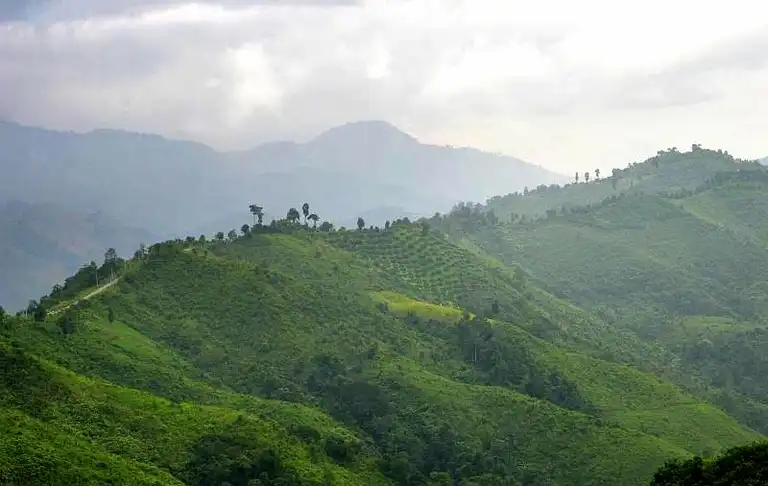
Views also differ within one property. A bedroom, balcony, breakfast terrace and public viewpoint are four different experiences. Decide which you need, then select the room accordingly. Paying extra for a “view hotel” may be unnecessary if you are perfectly happy enjoying the outlook from a shared area.


Highway 1256: select a route before a roadside base
The Tourism Authority of Thailand identifies Highway 1256 with Doi Phu Kha National Park, while its mountain-road itinerary distinguishes the Pua–Bo Kluea route from Highway 1081. These are useful planning references, but they are not live road-condition reports. Check your actual destination rather than assuming all Nan mountain routes are interchangeable.
If you will return to Pua after a day out, evening convenience may matter more than saving a small part of the morning approach. If you will continue to Bo Kluea, align checkout, fuel, meals and your onward booking. A one-way travel day has different needs from an excursion that returns to the same hotel.
Do not select a remote overnight stop solely because it appears closer to a park boundary. Find the attraction, entrance or activity you intend to use, then ask about that route specifically. For a continuing journey, read the Bo Kluea and Sapan location guide before choosing your final destination.
Three arrival situations and the base they suggest
Arriving late without a vehicle: favour a property with a confirmed pickup and a workable meal arrangement. A central address helps only if you can actually get there and enter at your arrival time. Send your expected arrival and request instructions before the travel day.
Three nights with your own car: a field-edge stay becomes easier to consider because food and excursions do not depend on separate transfers. Still check the entrance, parking and whether you genuinely want to drive again after an active day. Independence removes one constraint; it does not make every location equally pleasant.
A flight from Nan after the Pua stay: plan the airport transfer as a separate journey. Do not treat a hotel label or a generic driving estimate as a connection guarantee. An earlier return to Nan may be worth considering when a missed connection would disrupt the rest of the trip; our Nan Old Town shortlist covers that different kind of overnight stay.
Weather belongs in the final location check
Use the Thai Meteorological Department for current forecasts and warnings near departure, then ask your accommodation about its own approach and planned activities. A forecast describes conditions at a broader scale; the host can explain a particular entrance or pickup arrangement. Neither a scenic tourism itinerary nor an old guest photograph establishes present conditions.
Questions about choosing a Pua base
Should I book a rural stay without a car?
You can, provided transfers and meals are agreed beforehand. Ask for the complete arrival, dinner and onward-travel plan; do not assume on-demand transport will solve every journey.
Will the rice fields look like the listing photographs?
Not necessarily. Ask for dated images and a description of the current outlook. Choose a room you would still enjoy if the crop stage differs from the promotional picture.
Is an eastern location always better for Doi Phu Kha?
No. Your intended destination and whether you return to Pua determine the benefit. Balance the departure route against access to dinner and the rest of your stay.
How is this different from the hotel shortlist?
This guide chooses a location and transport pattern. The shortlist compares named properties and room questions after that location decision is made.