Stay in Chinatown when its food and heritage streets are central to your Bangkok visit. Choose the hotel by sleeping environment, the route to Wat Mangkon MRT and the evenings you intend to spend nearby. Shanghai Mansion is one documented design-stay candidate; verify the actual bedroom category rather than judging it by the public areas.
Affiliate disclosure: we may earn a commission from qualifying bookings, at no additional cost to you.
Search hotels and compare room options

Quick answer
Map the meals and walks you will repeat, then the station exit and return to reception. A main-road room may serve a food-led trip differently from a side-street category. Choose the bedroom and route together; do not use decorative interiors as evidence of silence or a particular outlook.
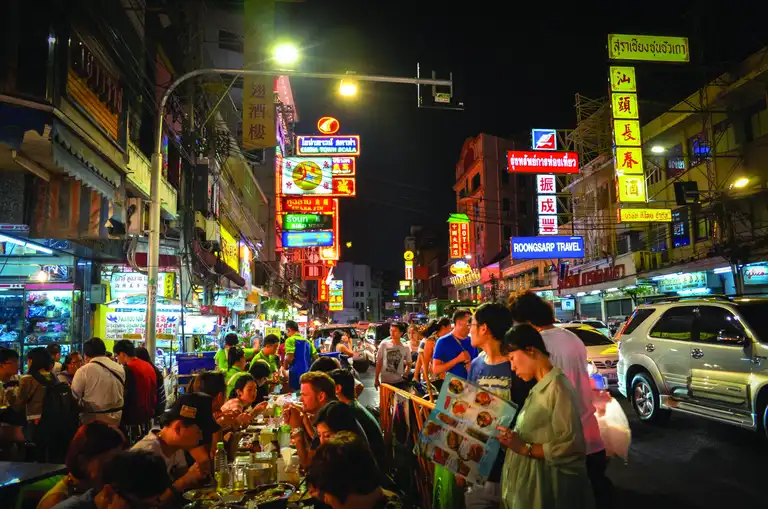
Yaowarat Road: great food, intense evenings
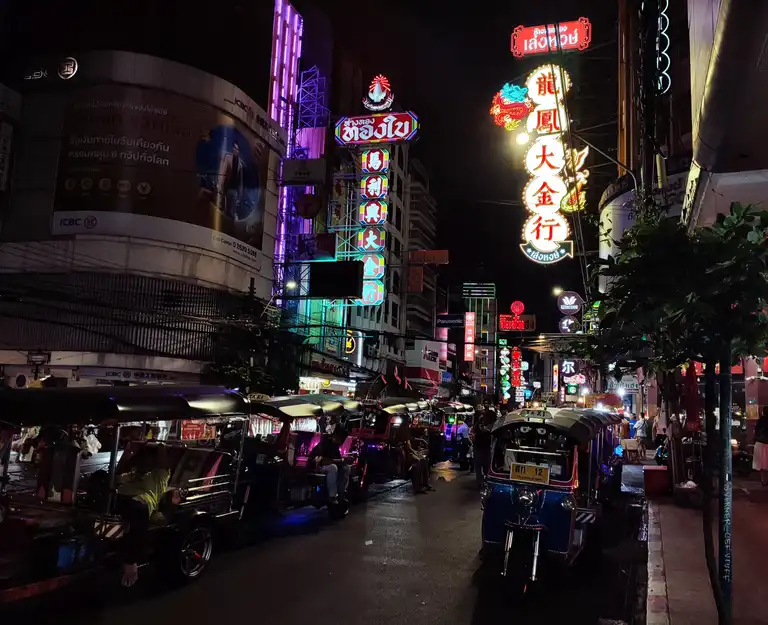
Yaowarat is the center of Chinatown's food scene, with gold shops, small restaurants and evening stalls. The energy attracts visitors who want to eat and photograph the neighborhood, but sound and crowds can continue after dinner. A room facing the main road may be noisy, even in a well-rated property. Ask about window insulation and inward-facing accommodation. Travelers with children or strollers should expect crowded pavements at peak times and plan quieter hours for walking.
Compare the sleeping hours of your party with recent reports about the exact building and room position. A main-road frontage can offer immediate food-scene access while creating a different bedroom environment. A high overall score does not settle that trade-off.
Wat Mangkon MRT: a practical hotel anchor
Wat Mangkon station on the MRT Blue Line improves public transport access to Chinatown. Hotels with a short, simple walk to the station are useful for visitors who want to explore other parts of Bangkok without depending entirely on taxis. However, the exact station exit, pedestrian crossing and baggage route still matter. If arriving late, ask the property for a clear entrance location. MRT operating hours are not all-night, so plan late returns accordingly.
Identify the station exit, crossing and reception door together. The Blue Line connection is useful only as part of a complete route. With bags or mobility needs, ask for the preferred approach rather than relying on the nearest map point.
Song Wat and Talat Noi: quieter heritage alternatives
Song Wat and Talat Noi have heritage streets, cafés and galleries that appeal to travelers who want a different rhythm from Yaowarat's busiest food strip. Depending on the hotel, the walk to Wat Mangkon or the river may be more significant. Some accommodation occupies adapted historic buildings, which can be charming but may involve stairs, limited lifts or different soundproofing. Confirm the room access and late check-in arrangements. These areas can make a longer stay more varied than remaining directly on one busy road.
Treat Song Wat and Talat Noi as distinct street settings rather than a promise of uniform silence. Look at the room position and the activities you will reach daily. A heritage label alone does not establish a convenient or quiet bedroom.
Hua Lamphong and riverside connections
Hua Lamphong is another transit reference point for the Chinatown area, with connections to rail and surrounding streets. Not all Chinatown hotels are equally convenient for the station, river piers or central shopping districts. Before booking, list the attractions that you want to visit and compare the routes. If your itinerary focuses mainly on Siam malls or far-eastern Sukhumvit, a hotel there may reduce daily travel. If food and heritage are the attraction, Chinatown is the more natural choice.
Plan the specific pier or onward transport point for the outing you intend to make. A general riverside or Hua Lamphong description is too broad to settle a connection. Confirm your departure service and then the route from the hotel.
Food safety, respect and good planning
Street food is one of Chinatown's great draws, but opening times, queues and vendors change. Explore with curiosity and respect places of worship, working businesses and residents. Choose busy stalls with good food handling rather than assuming popularity alone guarantees hygiene. Carry water during hot afternoons and avoid blocking narrow pavements for photographs. For a focused first visit, plan a few food stops and one heritage walk instead of trying to cover every lane in a single evening.
Build breaks into an evening food walk and agree on the return arrangement if your group separates. Verify current venue information for anything essential. Keep the visit respectful of working streets and businesses rather than following a crowded checklist at all costs.

Choose between living beside the food scene and visiting it
A Chinatown stay is most useful when the district’s meals and walking streets are central to the visit. If you intend to eat here once and spend the rest of the trip elsewhere, a different Bangkok base may remove repeated journeys. Decide how often you will return before treating a fashionable address as the obvious choice.
For a food-led stay, map the first breakfast, the evening meal area and the route back to reception. A quieter side street can be more useful than the most prominent frontage when sleep matters. Conversely, a visitor who wants to step directly into the evening activity may deliberately accept a busier approach.
Shanghai Mansion as a documented Yaowarat candidate
Shanghai Mansion’s official website presents a Chinatown boutique property with a Shanghai-inspired interior. Use it as one concrete candidate when design and the neighbourhood experience are part of the attraction. Its character does not establish the view, window arrangement or sound exposure of every category.
Inspect the exact room specification and ask about any essential requirement. A dramatic common area is not evidence that all bedrooms share its proportions or outlook. Compare the room you can actually reserve with alternatives serving the same daily route, rather than comparing only the general style of the properties.
Use Wat Mangkon for the complete station-to-room route
Save the station exit, the relevant crossing and the hotel entrance together. An MRT connection can be valuable for daytime city exploration, but the last walk still counts when carrying bags. Ask the property for its preferred arrival instructions rather than assuming the closest line on a map is the easiest approach.
Plan a late return separately from daytime rail use. Check the operator’s current service information for the day and establish an alternative if your evening extends beyond it. A hotel near a station does not create an all-night train connection, and an arrival route should not be reused without considering the time.
Explore heritage streets at a sensible pace
Put a small cluster of streets or sights together instead of rushing between unrelated recommendations. Keep a comfortable break in the plan and verify the current opening information of any particular business you want to visit. A highly photographed lane can still be a working neighbourhood, so leave entrances clear and respect residents and businesses.
For a mixed group, decide how much time everybody wants in crowded evening streets. Someone returning early should have a clear route and room access. A heritage-oriented visit can include quieter daytime exploration as well as dinner; it need not become a nightly race through a long food checklist.
Chinatown hotel FAQ
Is a Yaowarat-facing room always the best choice?
No. Compare immediate food-scene access with the room’s sleeping environment and your planned hours.
What does the Shanghai Mansion example establish?
It provides a documented Chinatown design-stay candidate. Confirm the reserved category’s layout and essential features independently.
Does a nearby MRT station settle the airport arrival?
No. Plan the whole route, including the correct station exit, final walk and luggage needs.
Should I stay here for only one Chinatown dinner?
Compare the rest of the Bangkok itinerary first. Visiting deliberately from a base serving most activities may be more practical.
Related RoamNivo guides
Sources and editorial approach
This guide draws on published location and operator information. Details can change, so confirm prices, transport schedules and essential facilities directly. We do not claim personal inspection of every property.