Quick answer: The best hotel area depends on whether your trip is about Korat's old centre, transport, shopping or nature. There is no single neighbourhood that works equally well for all four.
Affiliate disclosure: We may receive a commission from completed bookings at no extra cost to you. Rates and facilities must be confirmed with the provider.
Search hotels and compare room options


City centre versus commercial corridor
Central Korat near the Thao Suranari Monument makes sense for local streets, food and history. The Mittraphap Road commercial corridor suits travellers who value major shopping centres and road access. A station-adjacent stay is useful only when its actual station matches your arrival.
What works well is to match the itinerary with the first and last hour of each day. Check realistic road connections and the place where you will actually arrive, rather than using a whole-province map pin. A central map label can conceal a long transfer.
Train and bus arrival planning
Confirm the exact arrival station or bus terminal from your ticket. Compare the hotel’s entrance with that location, and decide whether the one-off arrival transfer matters more than everyday access to restaurants and appointments. A listing near one station is not automatically convenient for a different service.
Before booking, open directions for the hotel's exact entrance, test the route at the hour you expect to travel and see whether parking, luggage storage or an organised pickup is available. Review transport operators separately because the accommodation listing cannot guarantee service.
When Pak Chong makes more sense
Choose a Pak Chong-side base when the trip revolves around Khao Yai activities and the relevant park approach. It is a separate location choice, not a cheaper substitute for a city-centre Korat room. Confirm the activity meeting point before deciding where to sleep.
If you are planning only one night, reduce the number of major outings. The best trip often combines one anchor experience with spontaneous local meals, not four distant destinations. Weather, holidays and traffic can change the ideal schedule.
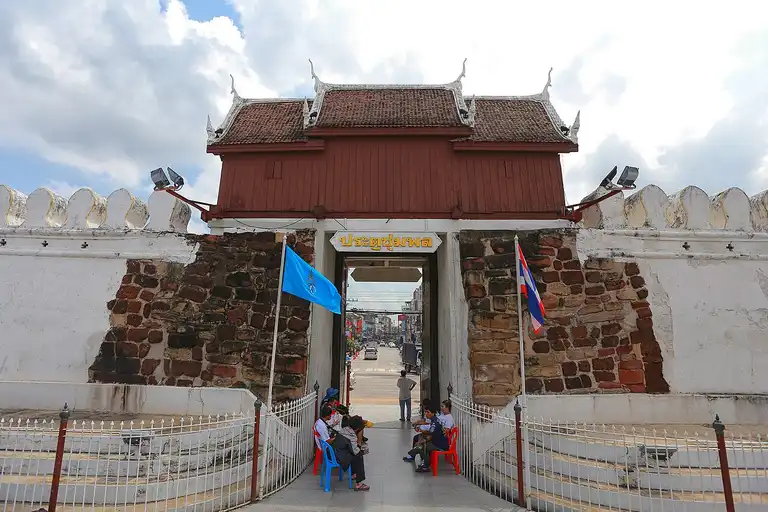

Choose the hotel area by your first and last daily journeys
The right Korat base removes journeys you would otherwise repeat. Write down where you expect to begin each morning and finish each evening. A heritage visit, an appointment and a shopping-led weekend create different answers. Compare the hotel entrance with those places before looking at room upgrades; the neighbourhood label is too broad to make the decision for you.
Use a three-column shortlist: the exact address, your main daily destination and the return journey after dinner. If all three hotels need the same transfer, compare room quality and price. If one lets you avoid a repeated cross-town trip, include that saving in the decision. This method is more reliable than assuming that the highest-rated property must be the most convenient.
Old-centre stays: useful for independent evenings
The Thao Suranari Monument area suits visitors who want central streets and heritage to shape their stay. The benefit is the opportunity to combine nearby activities instead of arranging a vehicle for every stop. It is strongest when you actually expect to spend time around the old centre, rather than travelling away immediately after breakfast.
Inspect the walking route and the room position separately. A convenient entrance does not guarantee a quiet bedroom, and a courtyard photograph does not show the junction outside. Ask which side of the building the booked category faces. Guests who sleep early should compare recent noise comments for that category, not just the hotel’s average review score.
Mittraphap Road: choose the correct side and entrance
A commercial-corridor hotel can fit a trip organised around shopping centres, business destinations or road travel. Its practical advantage is proximity to the particular place you need, not the road name itself. Pin that destination first. A property farther along the same corridor may offer little of the convenience you expected from the listing.
Pedestrians should trace the actual crossing and approach. Drivers should check which entrance leads to guest parking, whether arrival instructions are clear and how the next morning’s departure works. A room directly opposite an appointment can still require an inconvenient route. Ask the property to explain the approach rather than guessing from the shortest line on the map.
Arrival-point hotels: valuable only for the right connection
A station-oriented room can be sensible before an early train or after a late arrival. Start with the station printed on the ticket, not a search result for a generic Korat railway hotel. Then confirm the route with luggage and whether reception can handle your expected arrival. A useful transit stay removes uncertainty at the beginning or end of the trip.
For buses, apply the same rule to the named terminal. If the main purpose is a two-night city visit, being beside the arrival point may be less valuable than being near evening meals. Compare the transfer you make once with the journeys you repeat every day. Where these priorities conflict, choose consciously rather than letting the first transport stop dictate the whole stay.
Room requirements after the location decision
A family should establish the permitted number of guests, actual bed layout and any additional charges before comparing totals. A driver needs confirmed parking arrangements. Someone working between appointments may need a proper desk and a dependable place for breakfast more than a leisure facility. Ask specific questions rather than accepting a broad family-friendly or business-friendly label.
For mobility needs, describe the route you must use from vehicle to reception to bedroom. Check steps and lift access for the reserved category. Keep any important answer in the booking conversation. A property-wide accessibility statement may not settle the position of a particular room or building.
Hotel-area FAQ
Which area suits a short heritage stay?
Consider the old-centre area if central streets and evening food are the priority. Verify the real walking route before choosing.
Is a mall-side hotel always easy on foot?
No. Check the road crossing and both entrances. Map proximity alone does not establish pedestrian convenience.
Should I stay near the station?
It is worth considering for a connection that dominates your arrival or departure. Match the correct station and compare everyday journeys too.
Is Pak Chong an outer Korat neighbourhood?
No. Treat it as a separate base for a different part of the province, particularly when planning Khao Yai activities.
Related travel guides
nakhon ratchasima travel guide · best hotels in nakhon ratchasima city · korat vs khao yai where to stay · best budget hotels in nakhon ratchasima
Compare places to stay
Location trade-offs in more detail
Old-centre choice: convenient for people who want to spend much of the afternoon and evening outside their room. But check whether the actual walk involves busy junctions and whether the room faces a noisy street. A quieter side street may be worth an additional few minutes on foot.
Commercial corridor choice: convenient when your trip relies on shopping centres, major roads or vehicle pickups. The drawback can be pedestrian comfort. A hotel near a shopping mall on a map might stand across a major road with an inconvenient crossing. Look up the actual entrance before choosing.
Transit-linked choice: only useful when it matches the terminal you use. Korat's transport connections are not interchangeable. Confirm the train or bus arrival point from your ticket, then calculate the final transfer.
Pak Chong choice: better considered its own trip base. Never book there simply because a result page says “Nakhon Ratchasima” unless you genuinely intend to explore the park side.
How a Phimai-focused day changes your hotel location
Phimai Historical Park is outside Nakhon Ratchasima city, so a traveller planning an early heritage visit should map the actual drive from the hotel rather than selecting a room near a generic city landmark. A city-centre base can still be useful for restaurants and transport connections, but it adds a deliberate outbound and return journey. If the whole trip is centred on Phimai, compare accommodation nearer the site. Confirm the historical park's current opening arrangements and allow enough time to visit without rushing back for an early checkout.
Sources
- Tourism Authority of Thailand: Nakhon Ratchasima
- Thailand Digital Tourism Center: Phimai Historical Park
- Khao Yai National Park: official park information
- Department of National Parks Thailand
Editorial approach: area and booking guidance is based on geographic distinctions, official destination resources and traveller decision factors, not personally inspected hotels.
Continue planning your Nakhon Ratchasima stay
Korat travel guide · Best hotels in Korat · Budget hotels in Korat. Explore Khao Yai separately if your trip centers on nature resorts rather than Korat city.