Asok is one of Bangkok's most practical intersections for travelers using both the BTS Sukhumvit Line and MRT Blue Line. But a hotel advertised as near Asok may stand on a side street with a more complicated walking route than the map implies. Select a hotel by the actual station entrance and daily rail journeys, not the neighborhood name alone.

Quick answer
Choose by your actual everyday routine, exact property entrance and practical facilities rather than the area label alone. Compare the distinct local strengths and limits below before making a booking.
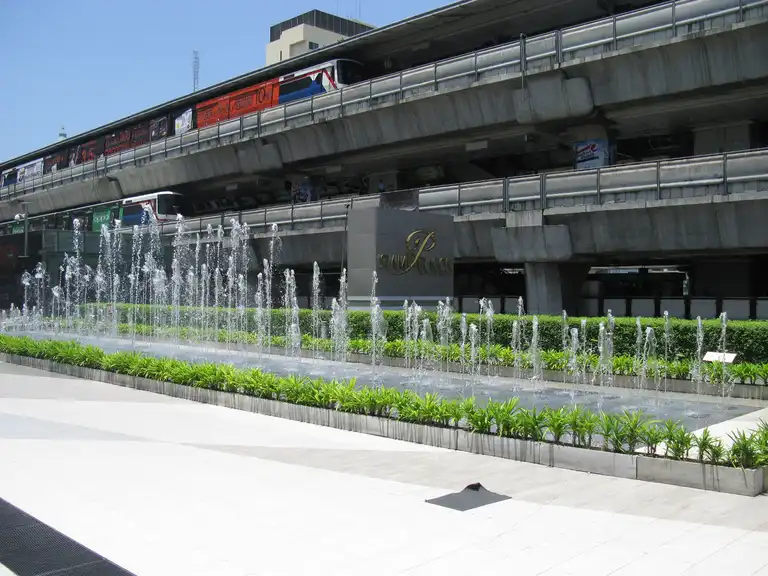
Asok BTS and Sukhumvit MRT interchange
These two stations provide access to different urban rail lines at a busy junction. The interchange is useful for itineraries combining multiple parts of Bangkok, though passengers may need to navigate stairs, passages and crowded exits. A hotel nearer an MRT entrance may suit trips on the underground Blue Line, while one near the BTS side may be more convenient for Siam or Phrom Phong. Confirm current exits and accessible paths directly.
At Asok BTS and Sukhumvit MRT, check the correct exits and luggage access; the interchange connects two separate rail systems.
North and south side of Sukhumvit Road
A hotel can be geographically close to the interchange but require busy crossings or a lengthy walk down a side lane. Consider whether the path remains comfortable in rain and heat. Large luggage makes a route less convenient than an ordinary map estimate suggests. Request directions from the hotel using a named station exit. A property with a short shuttle can be useful only when its schedule fits your intended journeys.
Hotel entrances on opposite sides of Sukhumvit Road can involve inconvenient crossings; map the actual lobby door.
Traffic noise and choosing the room
Asok is a dense road junction, so traffic and nightlife noise can affect street-facing accommodation. Read recent room-specific reviews rather than relying on an overall hotel score. Higher floors, interior-facing rooms or strong window insulation may help, but should be confirmed. A smaller quieter hotel several minutes farther away can provide better sleep than a landmark address directly above the busiest crossing.
Ask whether the booked room faces heavy traffic or a quiet courtyard, especially if arriving late.
Food, shopping and daily routine
The Asok area has restaurants, shopping and transport access, making it attractive for a short Bangkok visit. But if your trip is almost entirely in another neighborhood, repeated train journeys might not justify the central location. Compare an Asok room with Phrom Phong, Nana or Siam against your real destinations. The best value depends on morning and evening travel rather than the prestige of the station.
Dining is plentiful in this district, but some side lanes involve longer evening walks; check your route.
Airport transfer reality
Suvarnabhumi Airport Rail Link reaches Phaya Thai, where travelers can transfer to the BTS. This is not one direct train to an Asok hotel. A taxi may be more convenient late at night or with extensive luggage. Confirm your flight terminal, timing and transfer route. Don Mueang uses different connections and should not be treated as interchangeable. Leave time for Bangkok congestion on airport days.
Suvarnabhumi's Airport Rail Link does not stop at Asok; compare onward rail changes with a road transfer.
Booking near Asok for business travel
For a work stay, check desk space, reliable Wi-Fi, cancellation flexibility, breakfast hours and access to meeting locations. A hotel within easy reach of both rail systems may save time if meetings span Bangkok. But a room advertised as close to Asok is not necessarily quiet or suitable for video calls. Prioritize the facilities you will use most.
For work travel, prioritize a quiet desk-equipped room and the route to your daily meeting, not only the station label.


How to compare the complete accommodation offer
Start with three real candidates for the same dates, number of guests and room category. Check the complete total instead of the lowest advertised night rate. Taxes, breakfast, extra beds, housekeeping, cancellation terms and road transfers can change value significantly. A premium location may save money when it eliminates repeated taxis, while a secluded property can be good value if you genuinely plan to spend the day there. Match the accommodation to your routine rather than choosing only for a photograph.
Confirm the exact entrance rather than the midpoint of a beach or district. Many large hotels have multiple wings; a beachfront resort can place its cheapest rooms deep within the grounds. A city hotel can be a short straight-line distance from a station but require stairs, street crossings and a longer real walk. Families and people with mobility needs should request a practical route description from the property before booking. A statement such as five minutes to the beach is only useful when you know how that time was measured.
Recent reviews and room-specific evidence
Read recent guest reports about air conditioning, maintenance, noise, Wi-Fi and cleaning rather than relying solely on the overall rating. Separate opinions from travelers in premium suites from those who stayed in standard rooms. Ask whether the booked category has the view, beds, terrace or facilities pictured. For young children, verify child-safe layouts and appropriate beds. If an amenity is essential, obtain written confirmation and retain the booking terms.
Weather and seasonal decisions
Thailand's weather differs between regions, so do not apply one beach season to every island. Strong surf, tides and rough sea may interrupt swimming and boats, while urban rain can make walking and transfers uncomfortable. Check local warnings and operator notices before activities. Keep a flexible day in the itinerary and choose accommodation with facilities you can use when outdoors are unpleasant. When departing for an airport or ferry, leave a realistic buffer rather than relying on the fastest published journey time.
Plan a realistic two-day sample
Use the arrival day to settle in, locate the nearest appropriate beach or transport entrance, and identify your dinner options. On the next day, schedule your main activity at a time that suits weather and travel conditions, leaving a flexible period for rest or a local alternative. A hotel in the correct neighborhood makes these ordinary tasks easier. If you are comparing two locations, assess which one produces fewer unnecessary trips rather than trying to maximize the number of attractions covered each day.
Frequently asked questions
Does beachfront guarantee direct sand access from my room?
No. Check the exact room location, route and seasonal beach conditions.
Can I estimate travel times from map distance alone?
No. Road bends, traffic, walking routes, boat connections and luggage can change practical times.
Are the cheapest advertised rates the best value?
Not always. Compare final totals, inclusions and cancellations with identical dates and occupancy.
What is most important to verify with a property?
The actual room category, access route, critical amenities and arrival or departure arrangements.
Related RoamNivo guides
- sukhumvit hotels near mrt vs bts guide
- luxury hotels sukhumvit
- budget hotels sukhumvit
- phaya thai bangkok airport link hotels
Affiliate disclosure: this website may earn a commission on qualifying reservations at no additional cost.
Search hotels and compare room options
Editorial references
Based on published destination resources and official transport guidance where relevant. Conditions and services change; confirm essential details with providers. We do not claim personal hotel inspections.