Railay East is the mangrove-lined, boat-oriented side of Krabi's limestone peninsula. It is often more affordable than West Railay, but is not a conventional sandy swimming beach. Visitors staying here can walk to West Railay or Phra Nang in suitable conditions. The important decision is whether the value and transport access outweigh not having swimmable sand directly outside the room.

Quick answer
Choose a hotel or beach based on practical access and the experience you want, not only the name in a listing. The following comparisons explain the most important location and transport trade-offs before reserving.
Why Railay East is not Railay West
West Railay provides the famous sandy sunset-facing bay, whereas East Railay has mangroves, tidal mud and boat landings. A hotel facing East Railay should not promise swimming from its immediate frontage. Guests can use the paths across the peninsula to reach suitable beaches, but should consider heat, luggage and any mobility concerns. For a short stay, a quieter East Railay room may be economical; for daily beachfront swimming, the west side can be more convenient.
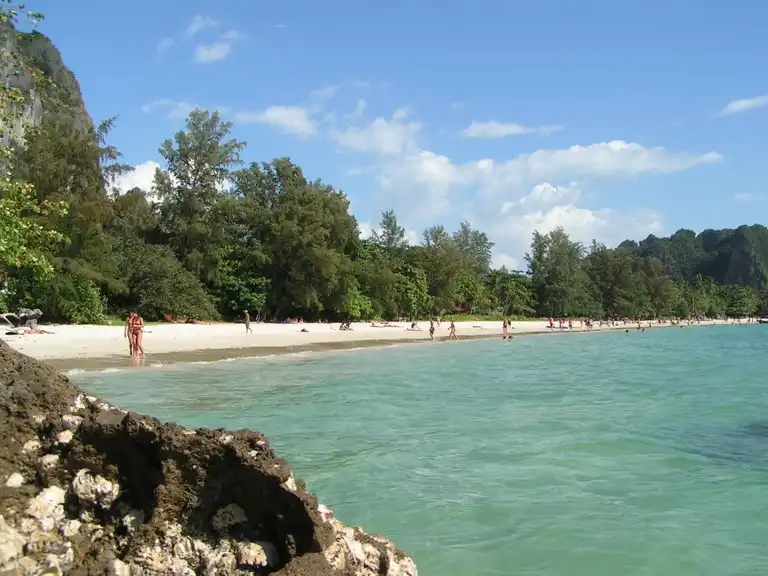
Railay East's mangrove-side shore is mainly for access and views; choose West Railay or Phra Nang for a classic sandy beach day.
Ao Nam Mao boat approaches
Longtail services from mainland departure points such as Ao Nam Mao often serve the East Railay side, but the exact landing changes with operators and conditions. Confirm with the accommodation before buying a transfer. Boats may involve wading or stepping through shallow water, so packed bags and appropriate footwear help. A road taxi cannot drive directly to Railay accommodation. Late flights demand careful planning around boat availability.
Check the boat departure point and current tides for the Ao Nam Mao approach; boats may use different landing arrangements.
Budget stays, rooms and noise
East Railay offers smaller properties and midrange accommodation that can cost less than the most desirable west-coast resorts. But room categories vary in air conditioning, sound insulation and walking access. Some evening venues can produce noise. Check recent reviews about the exact building, and verify check-in hours. A budget room is good value only when you are comfortable with the walk to beaches and restaurants.
Budget lodging on the east side can be practical, but ask about air-conditioning, room noise and walking routes after sunset.
Walking to Phra Nang and West Railay
Marked paths link Railay's different shores, making the peninsula appealing to travelers who enjoy short walks beneath dramatic limestone. However, the routes are not equivalent to a level urban pavement everywhere. Ask staff about the best path and any temporary restrictions. Travelers using strollers or carrying heavy bags should consider whether luggage assistance is offered. Wear suitable shoes rather than attempting every path barefoot.
The peninsula's paths connect east and west without a road transfer, but slippery sections and steps matter with luggage.
Rain, climbing and departure timing
Railay's weather can disrupt outdoor activities and boat operations. Climbing requires appropriate equipment and experienced local guides, and wet limestone can be dangerous. If an onward flight is scheduled, allow extra time for the boat crossing and road transfer. Spending the final night on the mainland may reduce risk when a departure is very early. East Railay is rewarding when its distinctive boat-and-walking character fits your travel style.
Rain can change climbing conditions and boat operations; maintain flexibility for the return to the mainland.


Choosing accommodation that actually fits your visit
Start by imagining an ordinary holiday day instead of comparing hotels by their most dramatic photo. Will you eat breakfast at the property? Do you want to return after swimming? Are restaurants, transit and your main attractions an easy walk away? A quiet seaside resort is rewarding when you plan to spend time there, but can become inconvenient if you pay for a vehicle every evening. Compare three properties at the same dates and guest numbers and calculate a complete stay cost, including breakfast, transfer fees, extra beds and taxes. A slightly more expensive but conveniently placed room may cost less overall.
Use the property's actual entrance rather than a generic beach label when checking travel routes. Hills, headlands, piers and resort gardens can turn a short straight-line distance into a much longer journey. If carrying large luggage or traveling with children, ask how guests reach the room and whether shuttles or luggage assistance are included. Do not assume that a hotel sharing the name of a beach offers direct swimming access. Some coastlines are rocky, tidal or mangrove-lined even when accommodations face the sea.
Read recent room-specific evidence
Photographs on accommodation websites can show upgraded suites and attractive shared facilities rather than the room included at the lowest price. Verify bed arrangements, bathrooms, air conditioning, noise, view and access to pools. Read recent reviews for recurring maintenance or cleanliness problems, and distinguish comments about different building wings. An important amenity should be confirmed in writing before a nonrefundable booking. Families should check child occupancy rules and pool supervision, while guests seeking a quiet room should consider nearby roads or nightlife.
Travel safety and seasonal flexibility
Coastal weather changes through the year, and boats may operate to different piers or suspend services in rough seas. Follow official safety notices, lifeguard flags and the instructions of qualified operators. Old beach photographs are not proof of current swimming conditions or legal access. If you will fly after an island transfer, allow spare time for local roads, boat queues and mainland transport. On a short break, a flexible activity day can make the visit much more enjoyable if weather disrupts an excursion.
Practical mistakes to avoid
Do not assume every hotel in a district has the same level of walkability. Do not compare refundable and nonrefundable rates as if they are identical. Check whether a beach club, resort restaurant or shuttle actually operates on your dates. Avoid booking a remote room if your main interest is a lively dining area several kilometres away. If your first choice of beach is unsafe or temporarily closed, choose another place that is legally accessible rather than forcing the original plan.
Frequently asked questions
Is beachfront the same as direct access to sand?
No. Check the specific building and the current access path. Some coastal hotels face mangroves or rocks.
Do hotel prices include transfers and meals?
Not necessarily. Compare the exact rate conditions and final total before payment.
Can a short map distance hide a difficult journey?
Yes. Routes can include hills, boat crossings, tide-dependent approaches or road detours.
How should I prepare for unexpected weather?
Follow current local guidance, allow a flexible day and leave time buffers for onward journeys.
Related RoamNivo guides
- railay beach krabi area guide
- phra nang beach railay guide
- krabi ao nam mao guide
- krabi tonsai beach guide
Affiliate disclosure: qualifying bookings may earn our website a commission at no extra charge.
Search hotels and compare room options
Before arrival, message your Railay hotel with your flight time and luggage needs. Ask which mainland pier and Railay landing are appropriate on your date and whether staff can help with baggage.
Editorial sources
This article uses published destination and operator information. Schedules, conditions and facilities may change; check essential details directly. We do not claim personal inspection of every property.