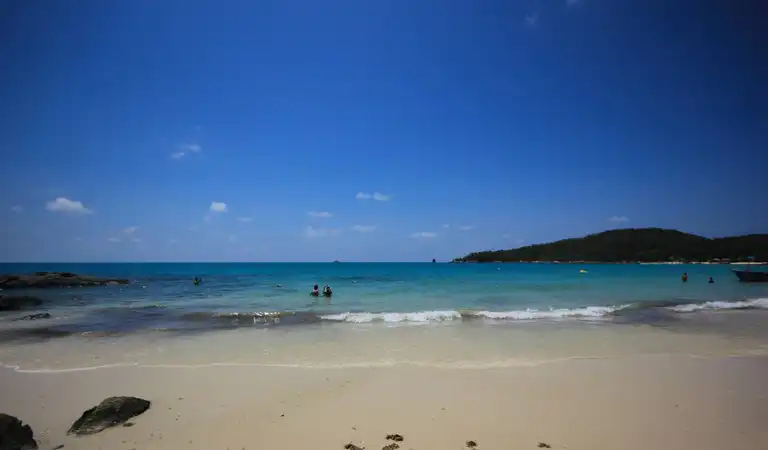
Ao Thian, also called Candlelight Beach, is a smaller Koh Samet bay south of the island's main visitor hub. It attracts travelers looking for a quieter beachfront stay rather than the busy restaurant scene of Sai Kaew. Names and boundaries can vary between hotel listings, so confirm the exact location and final island transfer before booking a room.

Quick answer
Choose a hotel or beach based on practical access and the experience you want, not only the name in a listing. The following comparisons explain the most important location and transport trade-offs before reserving.
Ao Thian and neighboring coves
Ao Thian is part of Koh Samet's sequence of smaller east-coast bays, each separated by headlands and local paths. A hotel described as being near Candlelight Beach might be a short distance from the sand or on a neighboring cove. The correct map position matters more than the romantic name. Before booking, check the entrance, room building and nearest restaurants. A secluded bay can feel wonderful for two nights but restrictive on a longer visit.
Ao Thian has a quieter collection of coves; verify which one your accommodation actually faces.
Small resorts and dining expectations
Many travelers choose this area to relax on a smaller beach and spend time at the accommodation. Confirm whether the hotel restaurant opens for dinner, if breakfast is included and how long reception is staffed. Not every small beachfront property has a pool or extensive amenities. A low price can be misleading when reaching a different restaurant requires a paid ride. Couples may prioritize a quiet terrace; families need shade, bedding and suitable food.
Dining choices are more limited than around Sai Kaew, so check restaurant hours and meal prices at the property.
Boat arrival from Ban Phe
Most visitors reach Koh Samet after traveling to Ban Phe and taking a boat to the island, often arriving around Na Dan or another operator-specific point. Ao Thian is not automatically the drop-off for the chosen service. Ask the hotel if it organizes onward transport and whether luggage must be carried along a sandy path. Verify evening check-in and the last practical connection before arriving late. On departure day, leave enough time for mainland travel.
Most island arrivals involve a boat from Ban Phe followed by an onward island transfer; confirm the full journey.
Ao Thian versus Wong Duean and Sai Kaew
Wong Duean offers a broader resort-oriented bay, while Sai Kaew is more convenient for varied restaurants and social evenings. Ao Thian suits visitors content with a quieter setting and fewer outside options. If beach hopping is central to the holiday, consider how local paths and vehicle transfers actually work. Nearby coves that look close on a map can be awkward with luggage or after dark. Prioritize a hotel near the activities you will use most.
Wong Duean offers a different concentration of services, while Sai Kaew is more active; compare your preferred evening routine.
Swimming and protected-area responsibility
Koh Samet is part of a national-park environment. Check entry requirements and avoid damaging coastal vegetation or leaving waste. Small coves can still be affected by currents, waves and tide; supervise children and follow current warnings. A calm photograph is not a safety assessment. A resort pool or sheltered seating becomes useful when weather prevents swimming. Flexible departure plans can reduce stress after a windy night.
Follow local beach safety guidance and national park restrictions; a quiet bay is not a promise of safe swimming.

Choosing accommodation that actually fits your visit
Start by imagining an ordinary holiday day instead of comparing hotels by their most dramatic photo. Will you eat breakfast at the property? Do you want to return after swimming? Are restaurants, transit and your main attractions an easy walk away? A quiet seaside resort is rewarding when you plan to spend time there, but can become inconvenient if you pay for a vehicle every evening. Compare three properties at the same dates and guest numbers and calculate a complete stay cost, including breakfast, transfer fees, extra beds and taxes. A slightly more expensive but conveniently placed room may cost less overall.
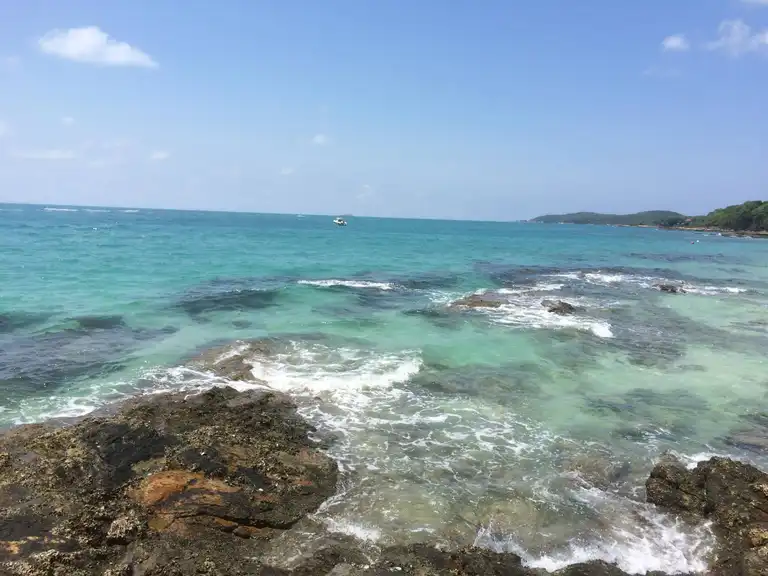
Use the property's actual entrance rather than a generic beach label when checking travel routes. Hills, headlands, piers and resort gardens can turn a short straight-line distance into a much longer journey. If carrying large luggage or traveling with children, ask how guests reach the room and whether shuttles or luggage assistance are included. Do not assume that a hotel sharing the name of a beach offers direct swimming access. Some coastlines are rocky, tidal or mangrove-lined even when accommodations face the sea.
Read recent room-specific evidence
Photographs on accommodation websites can show upgraded suites and attractive shared facilities rather than the room included at the lowest price. Verify bed arrangements, bathrooms, air conditioning, noise, view and access to pools. Read recent reviews for recurring maintenance or cleanliness problems, and distinguish comments about different building wings. An important amenity should be confirmed in writing before a nonrefundable booking. Families should check child occupancy rules and pool supervision, while guests seeking a quiet room should consider nearby roads or nightlife.
Travel safety and seasonal flexibility
Coastal weather changes through the year, and boats may operate to different piers or suspend services in rough seas. Follow official safety notices, lifeguard flags and the instructions of qualified operators. Old beach photographs are not proof of current swimming conditions or legal access. If you will fly after an island transfer, allow spare time for local roads, boat queues and mainland transport. On a short break, a flexible activity day can make the visit much more enjoyable if weather disrupts an excursion.
Practical mistakes to avoid
Do not assume every hotel in a district has the same level of walkability. Do not compare refundable and nonrefundable rates as if they are identical. Check whether a beach club, resort restaurant or shuttle actually operates on your dates. Avoid booking a remote room if your main interest is a lively dining area several kilometres away. If your first choice of beach is unsafe or temporarily closed, choose another place that is legally accessible rather than forcing the original plan.
Frequently asked questions
Is beachfront the same as direct access to sand?
No. Check the specific building and the current access path. Some coastal hotels face mangroves or rocks.
Do hotel prices include transfers and meals?
Not necessarily. Compare the exact rate conditions and final total before payment.
Can a short map distance hide a difficult journey?
Yes. Routes can include hills, boat crossings, tide-dependent approaches or road detours.
How should I prepare for unexpected weather?
Follow current local guidance, allow a flexible day and leave time buffers for onward journeys.
Related RoamNivo guides
- koh samet area guide
- koh samet ao kiu beach guide
- koh samet ao wong duean guide
- koh samet sai kaew beach guide
Affiliate disclosure: qualifying bookings may earn our website a commission at no extra charge.
Search hotels and compare room options
Editorial sources
This article uses published destination and operator information. Schedules, conditions and facilities may change; check essential details directly. We do not claim personal inspection of every property.