Khao Chamao is one of the best inland nature escapes in Rayong for travelers who want rainforest, waterfalls, cave systems and a quieter overnight base away from the coast. The centerpiece is Khao Chamao–Khao Wong National Park, a protected forest area spanning parts of Rayong and Chanthaburi. The park is known for Khao Chamao Waterfall, Khlong Pla Kang Waterfall, limestone caves, wildlife and short nature trails. Unlike Mae Phim or Ban Chang, this is not a resort-beach destination: the value comes from staying close enough to start early, hike before the heat builds and keep a flexible plan if rain changes trail conditions.
For accommodation logic, see Where to Stay in Khao Chamao. For a local shortlist, use Best Resorts & Homestays in Khao Chamao. Travelers focused on the park’s two main intents can compare Hotels Near Khao Chamao Waterfall and Hotels Near Khao Wong Caves.
Why Khao Chamao is worth an overnight stay
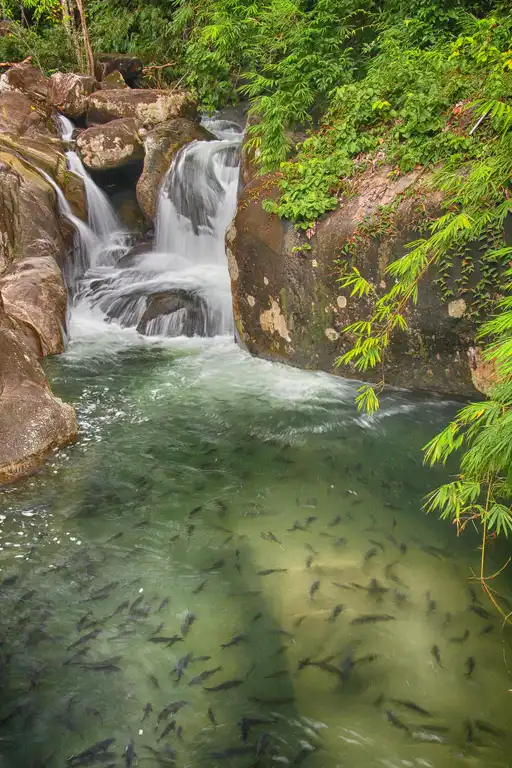
Many travelers treat Khao Chamao as a day trip from the Rayong coast, but staying overnight changes the experience. The Department of National Parks describes the park as roughly 83.68 square kilometres of well-preserved evergreen forest and watershed, with waterfalls, cliffs, caves and abundant wildlife. Tourism Authority of Thailand notes that Khao Chamao Waterfall stretches for about 3 kilometres through a sequence of named pools and cascades.
An overnight stay lets you visit early, when the forest is cooler and trails are quieter. It also gives you a second chance if heavy rain, rising water or temporary safety controls affect access.
Khao Chamao Waterfall
The main waterfall route is the easiest introduction to the park. TAT lists eight major sections along the stream: Wang Nueng, Wang Macha, Wang Morakot, Wang Sai Ngam, Pha Kluai Mai, Chong Khaep, Hok Sai and Pha Sung. One of the most memorable areas is Wang Macha, known for large freshwater fish in the clear pools.
The higher you climb, the more time and energy the route requires. Families with small children may get more value from the lower levels, while fit visitors can continue farther when conditions are safe. Footwear with grip matters because wet rock and roots can become slippery.
Khlong Pla Kang Waterfall
Khlong Pla Kang is a second waterfall system inside the national park and a good alternative for travelers who want a quieter route. TAT describes seven levels over roughly 1.3 kilometres. The character is more trail-focused than the main Khao Chamao cascade, and it works well for repeat visitors who have already seen the headline waterfall.
Check current access before driving there because seasonal rainfall can influence trail safety and water flow.
Khao Wong cave system
The cave side of the park serves a completely different intent. TAT describes Khao Wong as a limestone area with a large number of caves, with only a portion normally open to visitors. Official tourism information says visitors should contact park staff for a guide before entering the caves.
That requirement matters. Do not plan a self-guided cave exploration based on old blogs or map pins. Cave access can depend on ranger availability, rain, wildlife conditions and safety assessments. For cave-focused accommodation, see Hotels Near Khao Wong Caves.
Nature trails and viewpoints
TAT lists two nature-study routes of roughly 2 kilometres and 3 kilometres. The routes pass forest plants, wildlife signs and viewpoints. Visitors are asked to register at the visitor center before using them. These trails are useful if you want a forest walk that is less centered on swimming and waterfall pools.
The park also lists Pha Sawan viewpoint, reached with park guidance. This is a better fit for hikers than for travelers who only want a short waterfall stop.
Wildlife: observe, do not approach
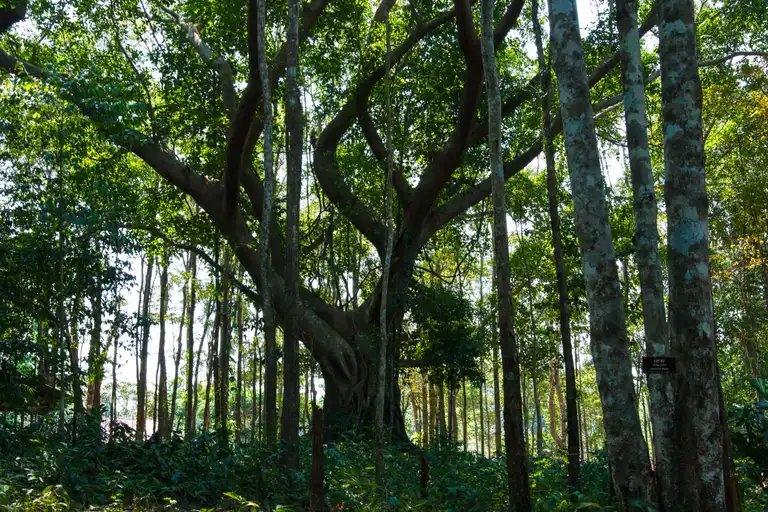
Khao Chamao–Khao Wong supports diverse reptiles, amphibians, birds and forest mammals. Wildlife photographers have documented tree frogs, cave geckos, snakes and other species in the park. This is a real wild environment rather than a landscaped attraction.
Stay on marked routes, avoid touching wildlife and use a torch only where permitted. Do not leave food or rubbish along trails. If you encounter a snake or other animal, give it space and let it move away.
Best time of day
Early morning is usually the strongest strategy. Temperatures are lower, the parking area is quieter and you have more daylight if you want to continue beyond the first waterfall levels. Late afternoon can be pleasant for short walks, but it gives less margin if the trail takes longer than expected.
Rainy-season planning
Rain can make Khao Chamao visually impressive, but it also increases risk. Water levels may rise quickly and rocks become slippery. The Department of National Parks can temporarily restrict attractions when conditions are unsafe. Treat same-day staff instructions as more important than a fixed itinerary.
How long should you stay?
One night: enough for an early waterfall visit and a relaxed departure. Two nights: best for combining Khao Chamao Waterfall with Khlong Pla Kang, nature trails or the cave zone. Three nights: useful for photographers, families who want a slower pace or travelers combining the park with Klaeng and Mae Phim.
Khao Chamao versus Klaeng
Choose Klaeng for beach, resorts and Mae Phim. Choose Khao Chamao for forest, waterfalls and caves. They complement each other well in a mixed two- or three-stop Rayong itinerary.
Khao Chamao versus Rayong city
Rayong city is stronger for business, shopping and urban services. Khao Chamao is the better base when nature is the purpose. Driving from the city for a single waterfall stop is possible, but staying locally makes an early start much easier.
Getting around
A car is strongly recommended. Local accommodation is dispersed, public transport is limited and the cave/waterfall sides of the park are not best treated as one walkable area. If you do not drive, arrange transfers with your accommodation before arrival.
Booking checklist
- Choose waterfall-side or cave-side intent before selecting accommodation.
- Check current park access and safety notices before departure.
- Start hikes early and wear shoes with good grip.
- Register for nature trails where required.
- Use ranger guidance for cave visits.
- Carry water but keep food secured and remove all rubbish.
- Use a flexible booking during periods of heavy rain.
RoamNivo may earn a commission when you book through selected links, at no extra cost to you. See our Affiliate Disclosure. Park access, trail conditions, cave availability, water levels and accommodation operations can change.
You can Search hotels and compare room options.
Frequently asked questions
Is Khao Chamao worth staying overnight?
Yes. One or two nights makes early park access much easier and gives you flexibility if weather changes the day’s plan.
Can I swim at Khao Chamao Waterfall?
Visitors commonly use the lower pools when conditions permit, but follow current park instructions because water levels and safety controls can change.
Do I need a guide for Khao Wong caves?
Official tourism information says visitors should contact park staff for a guide before cave exploration.
Is Khao Chamao good for families?
Yes, especially the lower waterfall sections and short nature activities. Families should avoid overcommitting to long, slippery routes.
How many nights are best?
Two nights is the strongest first-trip length if you want both waterfall and cave or nature-trail experiences.