Fang is a practical northern Chiang Mai base for travelers who want Doi Ang Khang, Fang Hot Spring and mountain scenery without staying in Chiang Mai city. The town itself is compact and functional, with markets, local restaurants, temples and a small but useful hotel market, while the strongest attractions sit outside the center and require road planning.
Tourism Authority of Thailand places Doi Ang Khang among Chiang Mai Province's major mountain attractions and describes the Royal Agricultural Station as a highland destination with temperate plants, gardens, birding and cool-season scenery. TAT also warns that the road up is steep and recommends a capable vehicle and experienced driver. Fang therefore works best when the hotel is chosen around the next day's route, not only the nightly rate.
If you are still choosing an area, use Where to Stay in Fang. For a property-level shortlist, continue to Best Hotels in Fang.
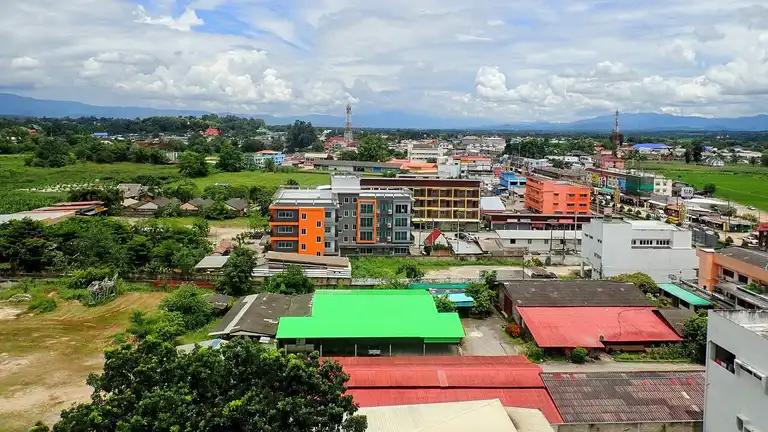
Fang town — the practical base
The center of Fang is useful rather than resort-like. Markets, shops, fuel, pharmacies and local food are easy to reach, which matters if you plan an early mountain departure. KYP Hotel, Tangerine Ville, Sleeping Tree, PATRA Agaligotel and Fang Villa Hotel are all current examples of the town's modest accommodation market.
Booking.com currently lists around two dozen hotels and places to stay in Fang. Baan innto resort stands out with a current score around 9.3 from roughly one hundred reviews, while Tangerine Ville is around 8.3, KYP Hotel around 7.9, Sleeping Tree around 7.8 and PATRA Agaligotel around 7.7.
Doi Ang Khang — the main mountain excursion
Doi Ang Khang is the strongest destination-level reason to stay in Fang. TAT describes the Royal Agricultural Station as a major Royal Project site with temperate flowers, fruit, gardens, nature trails and birding. Current TAT visitor information lists daily opening from 08:00 to 17:00.
The mountain road is the key planning factor. TAT specifically notes steep driving and recommends an experienced driver and suitable vehicle. Travelers without a car should arrange transport in advance rather than assuming normal town taxis will be equally easy to find at dawn.
For the dedicated stay strategy, use Hotels Near Doi Ang Khang.
Fang Hot Spring — a different nature day
Fang Hot Spring belongs to Doi Pha Hom Pok National Park and creates a completely different day from Doi Ang Khang. Wikimedia Commons documentation for the site describes a geothermal area with many hot springs, developed walking paths, mineral bathing facilities and a large spring that sends steam high above the ground.
The attraction works well as a slower morning or half-day visit. Travelers should verify current national-park access, bathing arrangements and local fees on the day of travel because facilities and operating conditions can change.
For a focused hotel decision, use Hotels Near Fang Hot Springs.
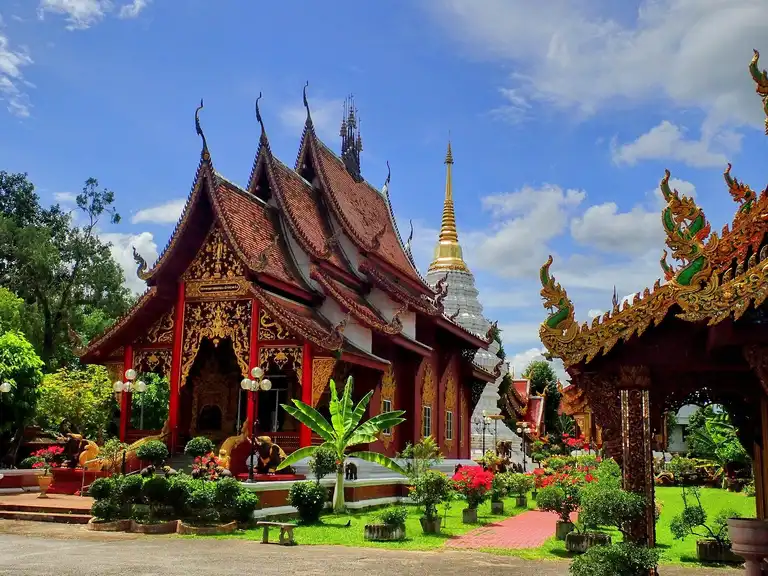
Wat Chedi Ngam and Fang's local heritage
Wat Chedi Ngam gives a cultural counterpoint to the mountain-and-hot-spring itinerary. The surrounding district also preserves traces of older settlement, including remnants associated with Fang's ancient wall.
These local stops are best used around check-in or the evening before a larger excursion. They are not substitutes for Doi Ang Khang, but they make a one-night town stay more meaningful than simply sleeping beside the highway.
Doi Wiang Pha — for a deeper nature itinerary
TAT describes Doi Wiang Pha National Park as spanning Chai Prakan and Fang districts, with evergreen and mixed forests, viewpoints, waterfalls and cool-season flowering. TAT also notes public buses and minibuses on the Chiang Mai–Fang corridor as part of the approach to the park, followed by charter transport for the final leg.
This is a separate nature commitment. Do not try to combine Doi Wiang Pha, Doi Ang Khang and Fang Hot Spring into one rushed day. Pick the landscape that matters most and use Fang as the service base.
Current hotel market
Baan innto resort currently has the strongest reviewed profile among well-documented Fang-area stays, around 9.3 from about ninety-six reviews. Tangerine Ville scores around 8.3 with a location score near 8.9, while KYP Hotel scores around 7.9 from more than fifty reviews and is praised for its downtown position near markets and restaurants.
Sleeping Tree scores around 7.8, PATRA Agaligotel around 7.7 and Fang Villa Hotel around 7.5. Fang Villa's guest feedback specifically mentions proximity to the bus station and Lotus supermarket, making it useful for transport-first stays.
Getting between Fang and Chiang Mai
Highway 107 is the core road corridor. Current 12Go inventory for Fang to Chiang Mai shows Transport Co service plus private taxi options, with the listed bus taking a little over four hours. Online inventory can be thinner than local station schedules, so confirm locally if the displayed departure does not fit your plan.
TAT's northern-road guidance also references frequent local bus and minibus movement along the Chiang Mai–Fang corridor from Chang Phueak Bus Terminal. Travelers should treat exact departure times as variable and verify the current schedule close to travel.
One-night Fang itinerary
Arrive in the afternoon, check into Fang town, visit a local temple or market, eat early and prepare for the next morning. Choose either Doi Ang Khang or Fang Hot Spring as the main excursion, not both unless you have a driver and a relaxed timetable.
Two-night itinerary
Use the first full day for Doi Ang Khang and the second for Fang Hot Spring or a quieter town-and-nature day. Two nights are especially useful in the cool season because mountain weather and road conditions can change.
Fang vs staying on Doi Ang Khang
Fang town gives more restaurants, markets, fuel and a deeper hotel market. A mountain stay gives atmosphere and earlier access but fewer services. If you are unsure about mountain driving, Fang is the safer default base and a pre-arranged day trip is often simpler.
Best season logic
Doi Ang Khang is especially popular in the cool season, when TAT highlights lower temperatures and winter flowers. That popularity also means more traffic and tighter accommodation. Book earlier for November through the coldest months and leave extra driving time.
Practical booking checklist
Check parking, reception hours, breakfast timing and whether the property can help arrange mountain transport. Drivers should ask about safe overnight parking and leave with a full fuel tank before heading into higher terrain.
For hot-spring visits, confirm towels and bathing facilities locally. For Doi Ang Khang, verify weather and road conditions. Families should check exact room occupancy because many Fang properties are smaller local hotels rather than large resorts.
Final planning rule
Use Fang town as the default base, choose one major mountain or geothermal excursion per day, and let road safety and early-morning logistics decide whether you stay central or closer to the highlands.
RoamNivo may earn a commission when you book through selected links, at no extra cost to you. See our Affiliate Disclosure. Hotel availability, road conditions, national-park access and transport schedules can change; verify current details before travel.
You can Search hotels and compare room options.
Frequently asked questions
How many nights do you need in Fang?
One night works for one major excursion; two nights are better if you want both Doi Ang Khang and Fang Hot Spring.
Is Doi Ang Khang easy to drive?
TAT warns that the road is steep and recommends a capable vehicle and experienced driver.
Is Fang separate from Chiang Mai city?
Yes. Fang is a northern district and destination base with its own hotel market and mountain-access logic.