Chiang Dao is one of northern Thailand's strongest small mountain destinations for travelers who want limestone scenery, caves, trekking and quiet rural stays without sleeping in Chiang Mai city. The district sits beneath Doi Luang Chiang Dao, Thailand's third-highest peak, and works best as a one- to three-night nature base rather than a rushed day trip.
Tourism Authority of Thailand's 2026 trekking guidance describes Doi Luang Chiang Dao as part of Thailand's fifth UNESCO World Biosphere Reserve and a sanctuary for rare sub-alpine plant communities. TAT also explains that access to the summit trek is regulated and that hikers are required to undergo training before entering the route. The main trek is about 8.5 km and typically takes a full day, with one-night camping used for sunrise and sunset experiences.
If you have not chosen your base, use Where to Stay in Chiang Dao. For a hotel-level comparison, continue to Best Hotels in Chiang Dao.

Chiang Dao town — the practical base
The town itself is modest but useful. Markets, cafés, fuel, pharmacies, the bus stop and local restaurants make it the safest default for first-time visitors. It is also where you have the widest choice of accommodation without committing to a remote farmstay or mountain-view property.
Travelers without their own vehicle benefit most from staying near town because Chiang Dao's attractions are spread across rural roads rather than connected by a dense local transit network.
Chiang Dao Cave — the easiest headline attraction
Chiang Dao Cave sits at the base of the mountain roughly 5 km from the district center. Wikimedia Commons documentation and local property information describe a large limestone cave complex with Buddhist images and several named cave sections, including Crystal, Reclining Buddha, Water and Horse caves.
The cave is easier to visit than the summit trek because it does not require a full-day mountain commitment. However, cave conditions, lighting, guide requirements and accessible sections can vary, so verify the current visitor setup on arrival rather than assuming every chamber is independently open.
For a focused stay strategy, use Hotels Near Chiang Dao Cave.
Doi Luang Chiang Dao — the protected mountain experience
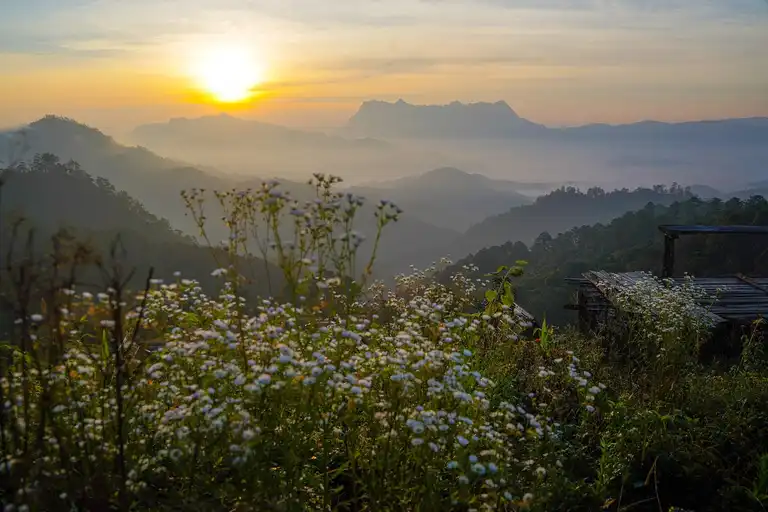
Doi Luang Chiang Dao is not simply a viewpoint. TAT's March 2026 guidance emphasizes its ecological significance, rare flora, more than 2,000 plant species and hundreds of wildlife species. The summit route lies inside Chiang Dao Wildlife Sanctuary and is managed as a conservation experience rather than a casual open trail.
TAT says hikers must undergo training to understand trail rules and environmental importance before the journey. The route is roughly 8.5 km and normally occupies a full day; overnight camping allows hikers to see sunset, sunrise and the sea of mist.
Because access requirements can change by season, do not book a non-refundable trekking trip until you have confirmed the current sanctuary process. For accommodation logic around the mountain, use Hotels Near Doi Chiang Dao.
Current hotel market
Booking.com currently lists more than eighty hotels and places to stay in Chiang Dao. Yatika Boutique Chiang Dao scores around 9.4, Chiang Dao Reset around 9.3 with more than 300 reviews, Dreamhome Chiangdao around 9.1 with more than 200 reviews, The View Chiang Dao around 8.4 with more than 570 reviews and The Wes Village around 8.7 with roughly 360 reviews.
That mix gives travelers meaningful choice between modern hotels, resort villages, homestays, guesthouses and glamping. Review depth is important: a 9.4 score from a few dozen stays is less robust than a slightly lower score supported by hundreds of reviews.
Chiang Dao Cave vs Doi Chiang Dao — two different intents
The cave is a half-day cultural-and-geological visit. Doi Luang Chiang Dao is a regulated trekking objective with training, environmental rules and a much larger time commitment. Combining them on one generic "mountain hotels" page would make the search intent less useful.
If you have one night, the cave plus local scenery is realistic. If you are trekking, stay at least two nights so the mountain day is not squeezed between long road transfers.
Getting from Chiang Mai
Chiang Dao lies roughly 85 km north of Chiang Mai by road and is commonly reached in about two hours depending on traffic and stopping pattern. Current online booking inventory is inconsistent: recent 2026 traveler reviews show regional van use, while some current route pages may surface only private taxi inventory.
For that reason, verify the actual van or bus departure close to travel rather than assuming an old timetable. Private transfer is simpler for groups and travelers arriving directly from Chiang Mai Airport, while local road transport can be much cheaper.
One-night itinerary
Arrive before afternoon, check in, visit Chiang Dao Cave and spend the evening at a mountain-view café or quiet guesthouse. Use the next morning for a hot spring, local temple or short nature stop before returning to Chiang Mai or continuing north toward Fang.
Two-night itinerary
Use day one for the cave and local roads. Reserve day two for a larger nature experience such as an approved trekking activity, birding or a longer rural loop. Two nights also protect you from poor mountain visibility on the first day.
Three-night itinerary
A third night makes sense for serious birders, hikers or travelers who deliberately want a slow rural break. It gives you room for weather changes, village experiences and a quieter hotel rather than spending every day in transit.
Best time and seasonal trade-offs
The cool season is popular for trekking and mountain views, while the wet season produces greener landscapes but more variable trail and cave conditions. Northern Thailand can also experience seasonal haze, so travelers focused on long-distance mountain views should check current air quality before committing to a view-led hotel.
Do not assume one month is perfect every year. Weather, burning conditions and sanctuary access can change independently.
Who should choose Chiang Dao?
Choose Chiang Dao if you like mountains, caves, birding, quiet guesthouses and slower rural travel. It is less suitable if you want nightlife, walkable urban attractions or a large international-hotel district.
Practical booking checklist
Check the exact property location, because a Chiang Dao address can mean town, cave-side, countryside or a more remote mountain road. Confirm parking, reception hours, breakfast and whether the property can arrange local transport or trekking support.
If you are planning Doi Luang Chiang Dao, verify current sanctuary training and booking requirements before paying for a non-refundable hotel specifically around a trek date. For cave visits, bring shoes with grip and expect humid or uneven conditions.
Final planning rule
Use Chiang Dao town as the default base, treat Chiang Dao Cave as a half-day attraction, treat Doi Luang Chiang Dao as a regulated full-day or overnight trekking objective, and choose remote accommodation only when mountain atmosphere is more important than transport flexibility.
RoamNivo may earn a commission when you book through selected links, at no extra cost to you. See our Affiliate Disclosure. Hotel availability, sanctuary rules, cave access and transport schedules can change; verify current details before travel.
You can Search hotels and compare room options.
Frequently asked questions
How long should you stay in Chiang Dao?
One night works for the cave and local scenery; two or three nights are better for trekking, birding or a slower nature trip.
Can you trek Doi Luang Chiang Dao freely?
No. TAT describes regulated access and mandatory training before the trek, so current sanctuary requirements should be confirmed first.
How far is Chiang Dao from Chiang Mai?
It is roughly 85 km by road and commonly around two hours depending on traffic and transport type.